Roulette for Beginners: Bets, Odds and Why European Beats American

Roulette looks like pure chaos — a spinning wheel, a rattling ball, a layout covered in numbers — but it is the most transparent game in the casino. Every bet has a fixed payout and a fixed probability, the house edge never hides, and one decision at the start matters more than every system invented since: which wheel you sit at.
European vs American: The Only Choice That Matters
A European wheel has 37 pockets: numbers 1–36 plus a single zero. The American version adds a double zero, making 38 — while paying identically. That single extra pocket nearly doubles the house edge from 2.7% to 5.26% on almost every bet. There is no strategy, streak or intuition that compensates for playing the worse wheel. If the lobby offers both, European is the correct answer every time, and French roulette with the "la partage" rule — returning half of even-money bets on zero — cuts the edge on those bets to 1.35%, the best deal on the floor.
The Bets: Outside and Inside
Outside bets cover large groups and pay modestly: red or black, odd or even, high or low all pay 1:1, while dozens and columns cover twelve numbers and pay 2:1. Inside bets target few numbers with bigger payouts: a straight-up single number pays 35:1, a split of two numbers pays 17:1, a street of three pays 11:1, a corner of four pays 8:1, and a six-line pays 5:1. The edge is identical across nearly all of them — the payout always sits exactly one unit short of fair odds, and that unit is the zero.
| Bet | Covers | Payout | Win probability (European) |
|---|---|---|---|
| Red / black, odd / even, high / low | 18 numbers | 1:1 | 48.65% |
| Dozen or column | 12 numbers | 2:1 | 32.43% |
| Six-line | 6 numbers | 5:1 | 16.22% |
| Corner | 4 numbers | 8:1 | 10.81% |
| Split | 2 numbers | 17:1 | 5.41% |
| Straight up | 1 number | 35:1 | 2.70% |
Why the Edge Is the Same Everywhere — With One Exception
Notice that probability times payout always lands on the same 97.3% return: bet one number or bet red, the house keeps 2.7% of turnover either way. The single exception is the American "basket" bet covering 0, 00, 1, 2 and 3, which pays 6:1 and carries a 7.9% edge — the worst standard bet in the casino and another reason to skip the double-zero wheel entirely. Everything else is a choice of volatility, not value: straight-up bets swing wildly, even-money bets smooth the ride, and the volatility logic from slots applies directly.
Systems: Martingale and Friends
- Martingale — doubling after every loss — wins small amounts often and then one losing streak hits the table limit or your roll and takes it all back with interest.
- Flat betting on even chances does not beat the edge either, but it is honest: your expected cost stays a stable 2.7% of turnover.
- Hot and cold number boards are decoration; previous spins carry zero information about the next one.
- The only real "systems" are wheel choice, table limits that fit your bankroll, and a stop time.
Announced Bets and the Racetrack
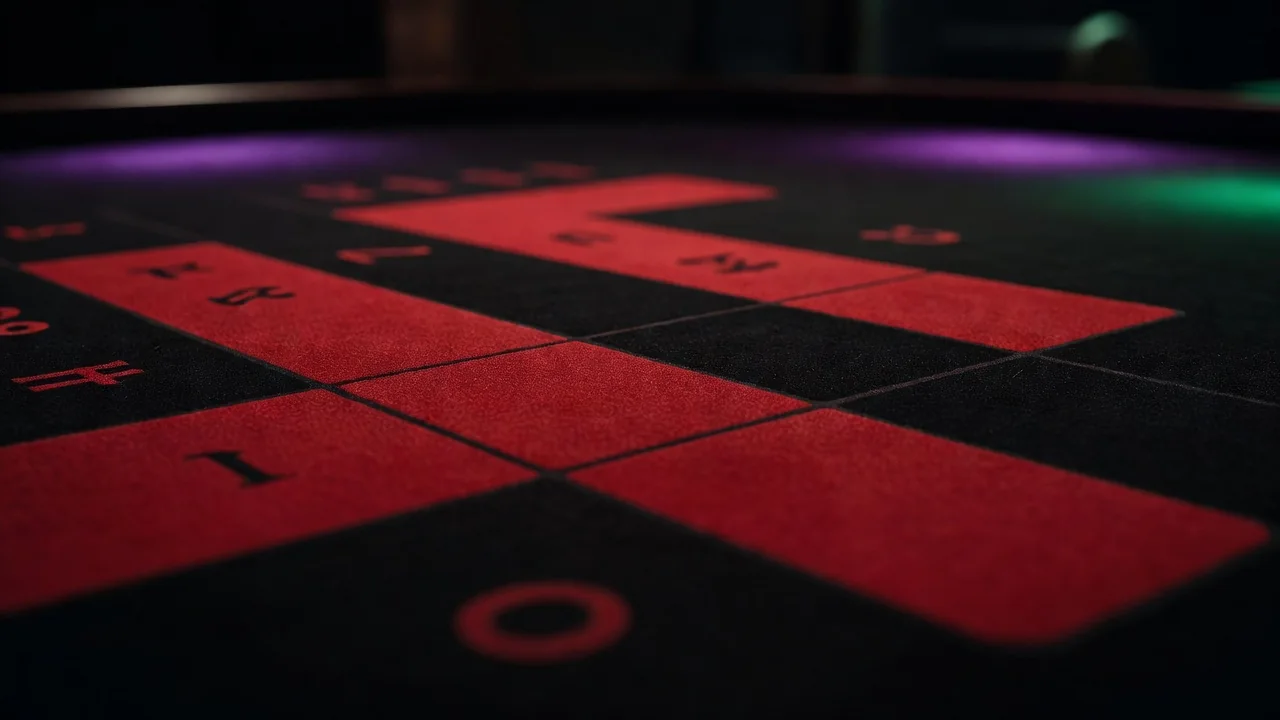
Beside the main layout, European tables offer the racetrack — an oval displaying the numbers in wheel order, used for the French announced bets. Voisins du zéro covers the seventeen numbers neighbouring zero with nine chips; tiers covers the twelve numbers opposite; orphelins fills the two remaining slices with five chips. These bets sound exotic but are simply pre-packaged combinations of splits and corners, priced at the same 2.7% edge as everything else. Their real value is practical: they let you cover a physical section of the wheel in one action, which is why experienced players use them when they enjoy following the ball's geography. Just remember that sector coverage changes the pattern of wins, not their expectation — the zero still takes its toll with perfect impartiality.
A note on pace, because it is the hidden variable in roulette's cost. An RNG table lets you spin every few seconds; a live table resolves every thirty to sixty seconds. At the same stake, the faster format multiplies your hourly turnover — and the 2.7% edge applies to turnover, not time. Beginners often burn a session budget in twenty minutes of rapid RNG spins and conclude they were unlucky, when the actual story is that they played four hours' worth of bets in twenty minutes. Slow the game down or shrink the stake; the math only cares about the total you put on the layout.
A Sensible First Session
Start at a European table with the minimum bet on even-money chances: you will win nearly half of spins, learn the rhythm and watch how payouts are handled. In the live section the pace is social and unhurried; RNG tables let you set your own tempo. Decide the session budget before the first spin, treat any win as a good evening rather than a new baseline, and remember what the math said all along: roulette is honest, elegant and unbeatable — which is exactly why it belongs in the entertainment budget, not the investment plan.